
A friend texts you “smh” and leaves it there. No follow-up. No emoji.
Now you’re stuck wondering: are they teasing you, or are they actually annoyed?
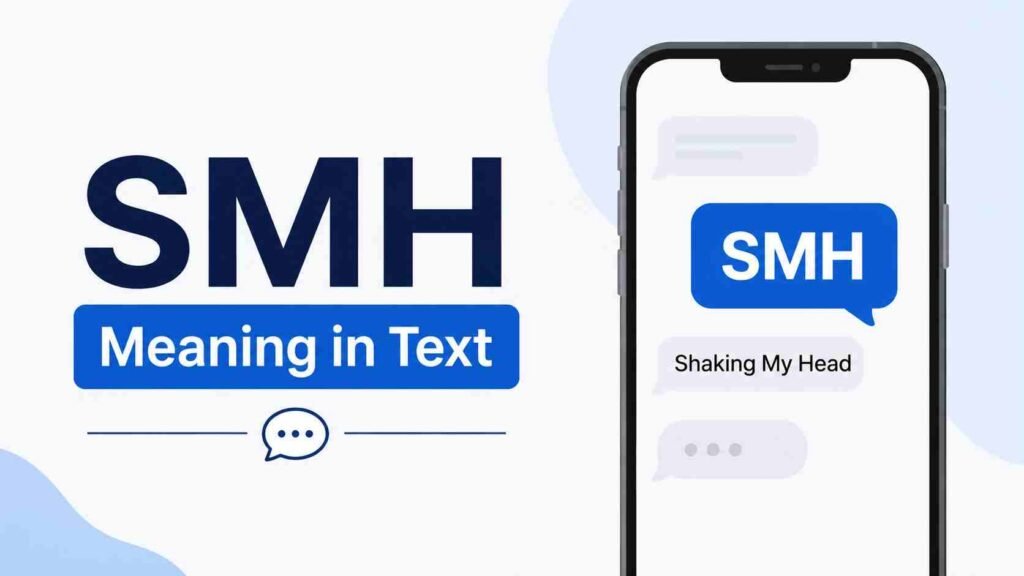
Here’s the quick answer. SMH means “shaking my head.” It’s a typed version of the head-shake you give in real life when something surprises or disappoints you.
But the smh meaning in text isn’t just the definition. The real skill is reading the tone behind it.
In this guide, you’ll learn what SMH stands for, how its meaning shifts with context, and how to tell if it’s playful or genuinely rude. Let’s clear up the confusion for good.
What does SMH mean in text?
SMH stands for “shaking my head.” That’s it.
When someone types it, they’re describing a gesture, not a full thought. Think of it as a shortcut for a feeling.
In real life, you shake your head when you can’t believe something or you disapprove. SMH does the same job in a chat.
Nobody is literally shaking their head, of course. It’s shorthand for disbelief, disappointment, mild frustration, or a little secondhand embarrassment.
You’ll usually see it in lowercase as “smh.” Most people don’t bother with capital letters.
Here’s the simple version: SMH is a typed sigh.
Read Also: Leniency Meaning: A Simple Guide With Examples and Usage
What SMH really means depends on context
This is where most people get tripped up. SMH doesn’t have one fixed tone.
The exact meaning changes based on who sends it and what came right before it. Same three letters, different vibe.
Here are the five most common ways people use it.
Playful teasing. Sent between close friends over something silly.
“You’ve watched that movie six times now, smh.”
Genuine annoyance. A real letdown, still casual but pointed.
“They cancelled the plans an hour before, smh.”
Self-directed. Reacting to your own mistake.
“Forgot my keys again, smh.”
Judgmental. Aimed at someone’s choices, and it stings a little.
“He said pineapple belongs on everything, smh.”
Reacting to absurd news. Bemused disbelief at something ridiculous.
“Gas is five dollars a gallon again, smh.”
Notice what changes. The words are identical, but the tone shifts with the situation.
To read it right, check three things: your relationship with the sender, the topic, and the message right before it. Do that, and the meaning usually clicks into place.
SMH in real conversations (with examples)
One-line examples only get you so far. Real chats have back-and-forth, and the tone lives in that exchange.
Watch how the meaning shifts across these mini conversations.
Friend A: “I studied the wrong chapter for the test.”
Friend B: “smh how did you manage that lol”
That “smh” is warm. The “lol” tells you they’re laughing with you, not at you.
Person A: “Left you on read? That was two hours ago.”
Person B: “smh…”
The ellipsis changes everything. This one reads annoyed and a little cold.
Sibling A: “I ate the last slice of your pizza.”
Sibling B: “SMH”
All caps hits harder. It signals real frustration, not a gentle eye-roll.
Small additions carry big meaning. Here’s the pattern to remember.
- Adding “lol” softens SMH into a joke.
- Adding an ellipsis sharpens it into irritation.
- Using ALL CAPS makes it sound harsher and more serious.
Read those extras, not just the letters. They’re your best clue.
Play It By Ear Meaning: Definition, Examples, and How to Use It
What SMH means on Snapchat, TikTok, and Instagram
Good news: the core meaning stays the same everywhere. Shaking my head, no matter the app.
What changes is the tone and how often you’ll see it. Each platform has its own flavor.
Snapchat. Quick reactions in chats and replies. Often self-deprecating or joking between friends.
TikTok. Common in comments reacting to cringe content or a bad take. Usually light disapproval.
Instagram. Shows up in DMs and comments. Often a mild “I can’t believe this” reaction.
Text and group chats. The most casual home for SMH. Anything goes here.
The platform doesn’t change the definition. It only shifts the vibe around it. When in doubt, fall back on the context clues you already know.
SMH vs SMDH vs facepalm
These three get mixed up a lot. They’re related, but they’re not the same.
Here’s how they stack up.
| Term | Meaning | Strength |
|---|---|---|
| SMH | Shaking my head — mild disbelief or disapproval | Light |
| SMDH | Shaking my damn head — stronger frustration | Medium, mildly NSFW |
| Facepalm / 🤦 | Embarrassment or “how did that happen” | Varies |
SMH is your everyday, gentle reaction. Reach for it when something’s mildly silly or annoying.
SMDH turns up the heat. That extra word (“damn”) makes the frustration land harder, so save it for bigger letdowns.
Facepalm is a different feeling altogether. It’s less about disapproval and more about embarrassment, either your own or someone else’s.
One caveat: skip SMDH in work chats. The implied swear word makes it a poor fit for anything professional.
Is SMH rude? A quick etiquette guide
Usually, SMH isn’t rude. In casual settings, it reads as a light eye-roll, not anger.
But it depends on who you’re talking to and what you’re talking about. It crosses into rude when it’s aimed at someone’s choices or dropped during a serious moment.
Use this table to decide fast.
| Situation | Use SMH? | Why |
|---|---|---|
| Close friends | Yes | Casual, understood tone |
| Family | Usually | Depends on the relationship |
| Coworkers | Sometimes | Can read dismissive |
| Boss or client | No | Too informal and judgmental |
| Serious bad news | No | Can seem insensitive |
Here’s the plain rule. If the topic is serious, skip the shorthand and type out what you actually mean.
This is a guide, not a hard rule. Read the room every time.
Other meanings of SMH
Let’s be honest about this part. Around 99% of the time, SMH means “shaking my head.”
But a few rare alternatives exist. You’ll spot them occasionally.
- Scratching my head — used for confusion instead of disapproval.
- So much hype — excitement about something.
- So much hate — a more negative, hostile tone.
There’s also a mature meaning floating around online, but it’s uncommon. Don’t jump to it unless the conversation clearly points that way.
Don’t overthink it. Unless the chat says otherwise, it means shaking my head. Context will confirm the rest.
Where SMH came from
SMH goes back to early internet chat culture. People have used it since at least the early 1990s, long before smartphones.
Gesture-based acronyms caught on for a simple reason. Like LOL, SMH hands the reader a physical reaction packed into three letters.
Typing “I am shaking my head at this” is slow. Typing “smh” is instant, and it carries the same weight.
Over time, it jumped from niche chat rooms into everyday texting. Now it lives comfortably in group chats, comment sections, and DMs everywhere.
FAQs
What does SMH mean in text?
SMH means “shaking my head.” It shows disbelief, disappointment, or mild frustration in a quick, casual way.
Is SMH rude or disrespectful?
Usually not. Among friends it reads as a light eye-roll. It can feel rude if it targets someone’s choices or shows up during a serious conversation.
What does SMH mean from a girl?
The same as from anyone else — shaking my head. Check the topic and tone to tell if she’s teasing or genuinely annoyed.
What does SMH mean from a guy?
Also shaking my head. Gender doesn’t change the meaning; context does.
What does SMH mean on Snapchat?
The same as everywhere. On Snapchat it’s often self-deprecating or joking between friends in quick replies.
What’s the difference between SMH and SMDH?
SMDH means “shaking my damn head.” It’s a stronger, more frustrated version of SMH, and it’s not a good fit for professional chats.
Can SMH be sarcastic?
Yes. Paired with “lol” or a playful topic, it often lands as sarcastic or teasing rather than serious.
Should I use SMH in professional messages?
Better to avoid it. SMH reads as too casual and slightly judgmental for work emails or client texts.
The bottom line
SMH means “shaking my head,” but its tone is never fixed. It can be playful, annoyed, self-directed, or genuinely rude, depending on the moment.
The one skill that matters is reading context. Check your relationship with the sender, the topic at hand, and the message right before it. Those three clues tell you almost everything.
Keep it for casual chats. Skip it when the conversation turns serious. When you’re unsure what it means, default to “shaking my head.”
Next time you get an “smh,” pause and check the context before you react. Pick one recent chat and try reading the tone right now.