
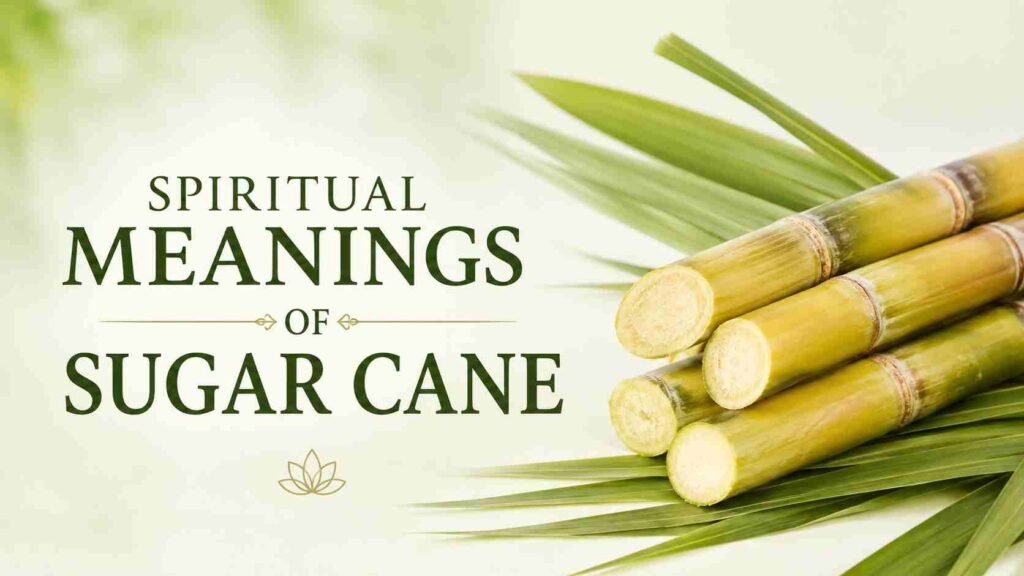

Have you ever spotted sugar cane and felt a quiet nudge, like it was trying to tell you something?
You’re not imagining it.
For thousands of years, people across the world have treated this tall, sweet plant as a symbol of something bigger than sugar.
In this guide, you’ll discover what sugar cane means spiritually, how different cultures read it, what it might signal in your dreams, and how to interpret it for your own life.
Here’s what we’ll cover:
- Why sugar cane carries spiritual weight in the first place
- Its core meanings and cross-cultural symbolism
- Dream interpretations and real-life signs
- Practical reflection to connect it all to you
Let’s dig in.
Why Sugar Cane Carries Spiritual Meaning

Sugar cane earns its symbolism honestly. Everything about the plant points to a deeper lesson.
Look at how it grows: a tough, fibrous stalk on the outside, hiding sweet juice within.
That single detail alone tells a story about hidden blessings and inner worth.
Then there’s the growth pattern. Sugar cane shoots up fast and clusters thick, which is why so many traditions link it to abundance and multiplying good fortune.
But here’s the part people love most.
You can’t enjoy the sweetness without effort. The cane has to be cut, stripped, and pressed before it gives up its juice.
That process mirrors real life, where the best rewards often come after pressure, patience, and a little discomfort.
Humans have always looked to plants and natural objects for meaning, and sugar cane fits that instinct perfectly.
One quick note before we go further: spiritual symbolism is personal.
What sugar cane means to you depends on your culture, your beliefs, and the season of life you’re in. Treat these meanings as gentle guides, not fixed rules.
Core Spiritual Meanings of Sugar Cane
Most spiritual meanings of sugar cane circle back to a handful of powerful themes. Here are the ones that show up again and again.
Sweetness and joy. At its heart, sugar cane reminds you to savor life’s simple pleasures. It’s a nudge to welcome happiness instead of rushing past it.
Abundance and prosperity. Because the plant grows dense and fast, it’s long been tied to wealth and fullness. Think of it as a symbol of resources that keep multiplying.
Resilience and endurance. A cane stalk bends hard in strong wind but rarely snaps. That’s a beautiful picture of staying flexible while holding your ground.
Transformation. Remember, sweetness only comes after the cane is cut and pressed. Growth through pressure is one of its richest messages.
A few more meanings worth knowing:
- Protection — some traditions plant cane to guard the home against negativity.
- Fertility — its rapid growth links it to new beginnings and creative “birth.”
- Authenticity — you strip the tough outer layer to reach the good stuff, just like revealing your true self.
- Growth — the stalk reaches upward toward the sun, encouraging you to keep expanding.
Take what resonates and leave the rest. That’s the whole point.
Read Also: 11 Spiritual Truths About Self-Love That Will Awaken You

Sugar Cane Symbolism Across Spiritual Traditions
Here’s where things get genuinely interesting. Sugar cane doesn’t carry one universal meaning.
It shifts depending on the tradition, and comparing those views adds real depth to your understanding.
Hindu Traditions
In Hindu thought, sugar cane connects to sweetness, righteousness, and offerings.
It often symbolizes a gentle, nurturing disposition, and its juice appears in devotional and healing contexts. Devout people with kind hearts are sometimes compared to its sweetness.
Buddhist References
Buddhist texts use sugar cane to teach about pleasure, change, and impermanence.
One striking example: cane loses its taste once pressed, mirroring how fleeting certain joys can be. It’s also used to show that nothing has a fixed nature, since cane can become juice, sugar, or molasses.
Jain Sources
Jain teachings link sugar cane to the sweetness of learning and friendship.
There’s a lovely image here: enjoying friendship with the wise is like eating cane from the top, sweet all the way through.
Christian and Biblical Symbolism
In Christian symbolic interpretation, sugar cane points to sweetness, provision, and spiritual nourishment.
One tradition reads it as “acquisition of truth from good,” tying it to the blessings of a faithful, fruitful path.
Folk, Caribbean, and West African Practice
In many folk and African-rooted traditions, sugar cane appears in offerings to ancestors and spirits.
The idea is simple and warm: sweeten the outcome, and give thanks for blessings received. The plant becomes a bridge between gratitude and hope.
The takeaway? No single reading owns the truth. These perspectives enrich each other.
What Does It Mean to See Sugar Cane in Real Life Spiritually
So you keep noticing sugar cane, maybe at a market, a farm, or even in a photo. What’s going on?
Often, it signals an incoming season of sweetness, growth, or reward.
The plant’s condition matters, too. Fresh, ripe cane leans toward blessings arriving, while dry or withered cane may hint at missed timing or a chance slipping by.
Consider this real-world example.
A friend who ran a struggling bakery started spotting sugar cane everywhere, at the wholesaler, on packaging, even in a customer’s grocery bag.
Weeks later, a large catering contract landed in her lap. She now half-jokes that the cane was her heads-up to stay ready.
Whether you read it as coincidence or a sign, the invitation is the same: appreciate what you already have, and stay patient with goals that grow slowly.
Pay attention to your emotions and circumstances when the symbol shows up. That context is where the real message lives.
Spiritual Meaning of Sugar Cane in Dreams
Dreams add another layer, and the details change everything. Here’s how common sugar cane dreams tend to break down.
Eating sugar cane. This usually points to savoring rewards and enjoying the fruit of your effort.
But watch the details. Eating it in small bits or feeling uneasy can carry a quiet warning to stay alert.
Harvesting sugar cane. A classic sign of reaping what you’ve patiently sown.
If you dreamed of harvesting during a tough season, it may be reassurance that your payoff is closer than it feels.
Planting sugar cane. New ventures, fresh intentions, and investing in your future.
It’s a hopeful dream about seeds you’re setting down now.
Cutting or receiving sugar cane. Cutting can mean releasing hidden value, while receiving it may signal blessings arriving through other people.
Dry or rotten sugar cane. This one leans cautionary. It may point to missed opportunities, depletion, or a gentle push to act before the moment passes.
Picture someone dreaming of chewing sweet cane during a stressful job hunt.
That dream might be their subconscious saying the effort is worth it, and the reward is coming.
Above all, dream meaning depends on your personal context and how the dream felt. Trust that feeling.
Positive vs. Cautionary Spiritual Meanings
It’s tempting to assume every sugar cane sign is pure good news. Most of the time, it is.
But a balanced view serves you better.
Positive readings include:
- Abundance and prosperity
- Joy and celebration
- Love and healing
- Earned success after hard work
Cautionary readings include:
- False sweetness or empty promises
- Pleasure that’s only temporary
- Emotional avoidance dressed up as “positivity”
- Burnout after pushing too long without rest
What tips the meaning one way or the other? Usually the setting, the plant’s condition, and your emotions in the moment.
Ripe cane in a lush field feels different from dry cane in a barren one. Let those details guide you rather than forcing a single interpretation.
Sugar Cane in Ritual, Offerings & Spiritual Practice
Beyond signs and dreams, sugar cane plays a hands-on role in many spiritual practices.
The most common thread is sweetness as gratitude.
Offering cane to ancestors, spirits, or the divine is a way of saying thank you and inviting sweeter outcomes.
It also serves as a symbol of fertile results and hoped-for prosperity, which is why it appears in blessings and harvest celebrations.
You don’t need an elaborate setup to honor this energy.
You might simply keep a small piece of cane on a gratitude altar, or reflect on its meaning while journaling about your blessings.
One respectful reminder: if you draw from a specific tradition, approach it with genuine care and cultural awareness.
These practices carry deep history, and honoring that history matters.
How to Interpret Sugar Cane Symbolism Based on Your Personal Context
Ready to make this practical? Interpretation gets much easier when you ask the right questions.
Run through these four filters:
- Where did you see it? A thriving field suggests growth, while a dry or empty setting may point to challenges.
- What was happening? Eating, planting, cutting, or simply watching each carries a different flavor of meaning.
- What condition was it in? Fresh and ripe leans positive, while dry or decayed leans cautionary.
- How did you feel? Calm and joyful reads very differently from anxious or frustrated.
Here’s the golden rule.
Your life season and beliefs are the most important lens of all. A prosperity sign hits differently during a career pivot than during a calm, stable stretch.
Trust your gut over any generic list, including this one.
Reflection Questions to Connect the Symbolism to Your Life
Symbolism only helps when you apply it. Sit with these questions and see what surfaces.
- Where are you currently cultivating sweetness and joy, and how could you nurture more of it?
- What efforts are you pouring in right now, and what reward are you waiting to harvest?
- Are you letting pressure or hardship reveal your inner strength instead of breaking you?
- Are you truly appreciating the abundance already present in your life?
- How might you share your “sweetness” with the people around you?
Jot down whatever comes up. Often, the answer you need is already waiting just under the surface.
Conclusion
Sugar cane weaves together some of life’s warmest themes: sweetness, growth, resilience, and rewards that come after real effort.
Its meaning shifts across cultures, traditions, and personal experiences, and that variety is a feature, not a flaw.
Here’s what to carry with you:
- Sweetness often follows patience and pressure.
- Abundance and growth are recurring messages, but context matters.
- Your intuition is the best interpreter you have.
So the next time sugar cane crosses your path, in a market, a dream, or a quiet moment, let it remind you to grow steadily, endure gracefully, and savor the sweetness already within reach.